Physiotherapy vs Physical Therapy: Difference, Scope, Career, and Future in Pakistan
Physiotherapy vs Physical Therapy: Introduction
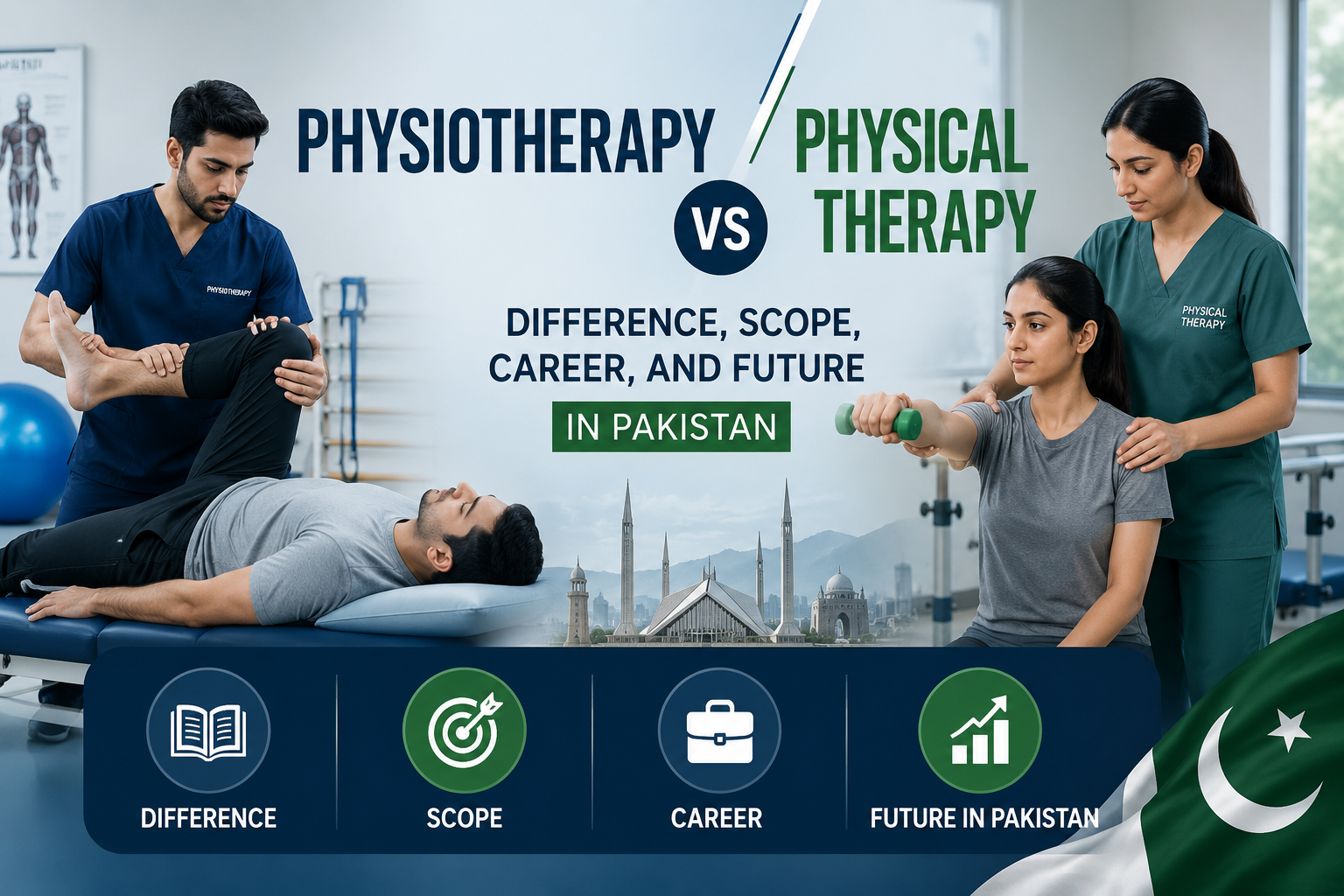
Physiotherapy vs physical therapy — this is one of the most searched questions in Pakistan’s healthcare field. Many students, patients, and healthcare professionals in Pakistan often ask one common question: What is the difference between physiotherapy and physical therapy? Some people use the word “physiotherapy,” while others say “physical therapy.” In universities, the degree is commonly known as Doctor of Physical Therapy (DPT), but in hospitals and clinics, the professional is usually called a physiotherapist.
This confusion is very common, especially among students who want to choose an allied health profession after FSc Pre-Medical or those who are planning to build a career in rehabilitation sciences. The simple answer is that physiotherapy and physical therapy are mostly the same profession, but the terminology changes from country to country.
In Pakistan, the term physiotherapy is widely used in hospitals, private clinics, rehabilitation centers, and academic discussions. However, the degree name Doctor of Physical Therapy is also commonly used. In the United States, the term physical therapy and physical therapist is more common. In the United Kingdom, Australia, Middle East, India, and Pakistan, the word physiotherapy is more familiar.
This article explains the complete difference between physiotherapy and physical therapy, their role in patient care, career scope in Pakistan, international opportunities, AHPC registration importance, and future demand in the healthcare system.
What Is Physiotherapy?
Physiotherapy is a healthcare profession that focuses on restoring movement, improving physical function, reducing pain, preventing disability, and helping patients return to normal life. A physiotherapist assesses the patient’s condition and designs a treatment plan according to the patient’s physical problem, age, lifestyle, injury, disease, or disability.
Physiotherapy is not just massage or machine therapy. It is a scientific and evidence-based healthcare field that uses exercise therapy, manual therapy, rehabilitation, posture correction, patient education, and movement training.
Physiotherapy is commonly used for:
- Back pain and neck pain
- Joint pain and arthritis
- Sports injuries
- Stroke rehabilitation
- Paralysis and neurological conditions
- Post-surgical rehabilitation
- Fracture recovery
- Pediatric rehabilitation
- Women’s health rehabilitation
- Cardiac and respiratory rehabilitation
- Balance and walking problems
- Elderly care and fall prevention
The main goal of physiotherapy is to improve the patient’s quality of life without unnecessary dependence on medicines or surgery.
What Is Physical Therapy?
Physical therapy is another term for the same healthcare profession. According to World Physiotherapy (the global body representing physiotherapy), both terms refer to the same health profession worldwide. It is commonly used in the United States and some other countries. A physical therapist helps patients improve movement, strength, flexibility, balance, coordination, and functional independence.
Physical therapy focuses on treating movement-related problems through exercises, hands-on techniques, patient education, and rehabilitation plans. For example, if a patient has knee replacement surgery, a physical therapist helps the patient regain knee bending, walking ability, muscle strength, and confidence in daily activities.
Physical therapy is also used for patients recovering from injuries, surgeries, neurological diseases, chronic pain, and physical disabilities.
In simple words, physical therapy and physiotherapy have the same goal: to restore movement, reduce pain, and improve function.
Physiotherapy vs Physical Therapy: Main Difference
The main difference between physiotherapy and physical therapy is terminology, not the core purpose of the profession.
| Comparison Point | Physiotherapy | Physical Therapy |
|---|---|---|
| Common Term Used In | Pakistan, UK, Australia, India, Middle East | USA, Canada, some other regions |
| Professional Title | Physiotherapist | Physical Therapist |
| Degree Name in Pakistan | Doctor of Physical Therapy / DPT | Doctor of Physical Therapy / DPT |
| Main Purpose | Restore movement and function | Restore movement and function |
| Treatment Methods | Exercise, manual therapy, electrotherapy, rehabilitation | Exercise, manual therapy, functional training, rehabilitation |
| Patient Care Area | Pain, injury, disability, rehab | Pain, injury, disability, rehab |
| Professional Category | Allied Health Profession | Allied Health Profession |
So, if someone asks whether physiotherapy and physical therapy are different, the best answer is:
They are generally the same profession, but the name changes according to country, education system, and healthcare terminology.
Physiotherapist vs Physical Therapist
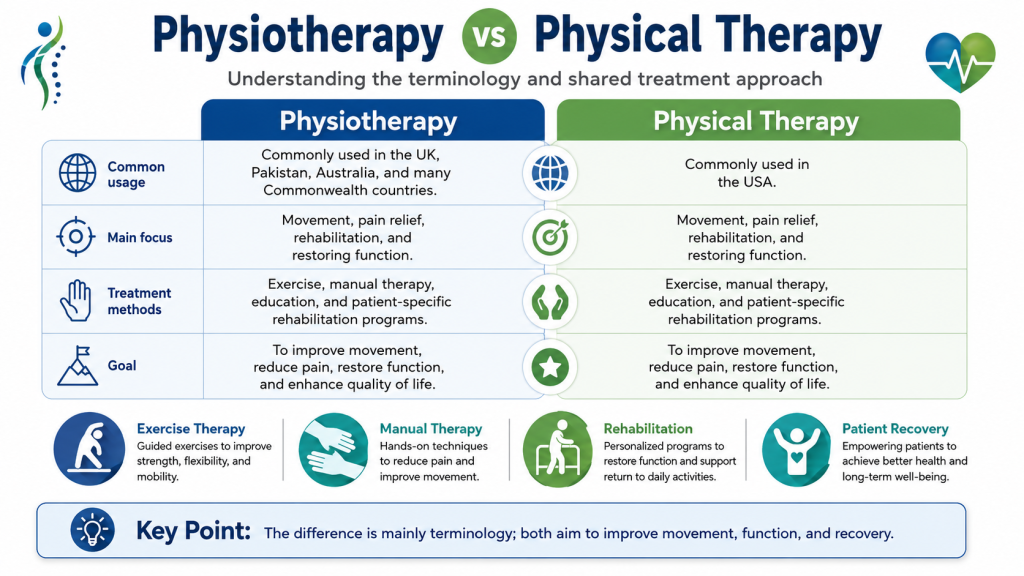
A physiotherapist and a physical therapist are usually the same type of healthcare professional. Both are trained to assess, diagnose movement-related problems, treat pain and disability, and improve physical function.
However, their title may depend on the country where they work. In Pakistan, the title physiotherapist is more common. In the USA, the title physical therapist is used. Additionally, Pakistani DPT graduates may need to use both terms according to the requirement of the country, employer, or licensing body.
For example:
- Pakistan: Physiotherapist / DPT Graduate
- USA: Physical Therapist
- UK: Physiotherapist
- Australia: Physiotherapist
- Gulf countries: Physiotherapist / Physical Therapist, depending on authority wording
This is why students and professionals should understand both terms, especially if they are planning for foreign jobs, higher education, or professional licensing abroad.
Is DPT the Same as Physiotherapy?
In Pakistan, DPT stands for Doctor of Physical Therapy. It is the professional degree that prepares students to become physiotherapy professionals. Many universities in Pakistan offer DPT as a five-year program.
After completing DPT, graduates can work in clinical physiotherapy, rehabilitation centers, hospitals, sports setups, private clinics, academic institutions, and home-based rehabilitation services. However, professional registration and licensing requirements should be followed according to the relevant regulatory authority in Pakistan.
DPT graduates study subjects such as anatomy, physiology, kinesiology, biomechanics, pathology, exercise therapy, electrotherapy, manual therapy, neurology, orthopedics, cardiopulmonary rehabilitation, sports physiotherapy, research, and clinical practice.
So, DPT is the degree, while physiotherapy or physical therapy is the profession.
Treatment Methods Used in Physiotherapy and Physical Therapy
Both physiotherapy and physical therapy use almost the same treatment methods. These include:
1. Exercise Therapy
Exercise therapy is the foundation of physiotherapy. It includes stretching, strengthening, balance training, mobility exercises, endurance training, and functional exercises. It helps patients recover from pain, weakness, stiffness, injury, or surgery.
2. Manual Therapy
Manual therapy involves hands-on techniques used by the physiotherapist to improve joint mobility, reduce muscle tightness, and relieve pain. It may include mobilization, soft tissue techniques, stretching, and joint movement techniques.
3. Electrotherapy
Electrotherapy includes modalities such as TENS, ultrasound therapy, heat therapy, cold therapy, and muscle stimulation. These techniques may help in pain relief and tissue healing, but they are usually used along with exercise and rehabilitation.
4. Posture and Ergonomic Training
Many patients suffer from back pain, neck pain, and shoulder pain due to poor posture, long sitting hours, mobile phone use, and incorrect working habits. Physiotherapists guide patients about correct posture, workplace setup, and safe body mechanics.
5. Neurological Rehabilitation
Patients with stroke, spinal cord injury, paralysis, Parkinson’s disease, multiple sclerosis, or nerve injuries may need neurological rehabilitation. Physiotherapy helps improve balance, walking, coordination, muscle control, and functional independence.
6. Sports Rehabilitation
Sports physiotherapy helps athletes recover from injuries and return to sports safely. It includes injury prevention, strength training, flexibility training, taping, performance improvement, and return-to-play planning.
Scope of Physiotherapy vs Physical Therapy in Pakistan
The scope of physiotherapy in Pakistan is increasing because awareness about rehabilitation, pain management, sports injuries, elderly care, and non-surgical treatment is growing. Many patients now prefer physiotherapy for back pain, knee pain, shoulder stiffness, stroke recovery, and post-surgical rehabilitation.
Physiotherapists can work in:
- Government hospitals
- Private hospitals
- Rehabilitation centers
- Sports clubs
- Fitness centers
- Home health services
- NGOs and disability centers
- Universities and colleges
- Private physiotherapy clinics
- Online consultation platforms
For a detailed look at job opportunities, read our guide on physiotherapy in Pakistan: hospital jobs vs private clinics. The demand is also increasing because Pakistan has a large population with lifestyle-related pain, road traffic injuries, workplace posture problems, diabetes-related complications, stroke cases, and orthopedic conditions.
Career Options After DPT in Pakistan
After completing DPT, graduates can choose different career pathways according to interest and skills. Learn more about allied health professionals in Pakistan and career opportunities in rehabilitation.
Popular career options include:
- Clinical Physiotherapist
- Sports Physiotherapist
- Neuro Physiotherapist
- Orthopedic Physiotherapist
- Pediatric Physiotherapist
- Cardiopulmonary Physiotherapist
- Women’s Health Physiotherapist
- Rehabilitation Specialist
- Lecturer or Demonstrator
- Research Assistant
- Home Care Physiotherapist
- Private Clinic Owner
- Online Physiotherapy Consultant
Students who want better career growth should focus on clinical skills, communication, patient handling, documentation, research knowledge, and specialization.
Physiotherapy Career Abroad
Physiotherapy and physical therapy are respected healthcare professions internationally. Countries like USA, UK, Canada, Australia, Saudi Arabia, UAE, Qatar, and other Gulf countries have demand for rehabilitation professionals.
However, Pakistani DPT graduates must understand that every country has its own licensing rules. A degree alone may not be enough. Usually, foreign licensing may require:
- Degree evaluation
- Transcript verification
- Clinical experience
- English language test
- Licensing exam
- Professional registration
- Good standing certificate
- Document verification
For example, the USA uses the term physical therapist and has its own licensing examination process. The UK uses the term physiotherapist and requires registration with the relevant professional body. Gulf countries may require DataFlow, Prometric exam, and health authority license.
Therefore, students should plan early if they want to work abroad.
AHPC Registration and Allied Health Professionals in Pakistan
Physiotherapy is part of the allied health professional system. In Pakistan, allied health professionals are becoming more organized due to regulatory changes and professional registration systems. Registration is important because it supports professional recognition, verification, employment, and legal practice.
For DPT graduates and other allied health professionals, registration with the relevant council or authority is an important step for professional identity. For complete details, read our guide on AHPC Registration in Pakistan. Students should keep their documents complete, including degree, transcript, CNIC, experience certificates, and university verification documents.
Professional registration also helps in foreign verification, employment process, and career credibility.
Which Term Should You Use on Your CV or Website?
If you are a Pakistani DPT graduate, you can use both terms strategically.
For Pakistan-based audience, use:
- Physiotherapist
- Doctor of Physical Therapy
- DPT
- Physiotherapy Consultant
- Rehabilitation Specialist
For international audience, also include:
- Physical Therapist
- Physical Therapy
- Movement and Rehabilitation Specialist
From an SEO perspective, a website should include both “physiotherapy” and “physical therapy” because users search with different terms. To illustrate, Pakistani users may search “physiotherapy in Pakistan,” while international users may search “physical therapy career” or “physical therapist vs physiotherapist.”
Common Myths About Physiotherapy and Physical Therapy
Myth 1: Physiotherapy is only massage
This is false. Physiotherapy is a professional healthcare field based on anatomy, physiology, movement science, exercise therapy, rehabilitation, and evidence-based practice.
Myth 2: Physical therapy is only for sports injuries
Physical therapy is used for many conditions, including stroke, surgery recovery, back pain, arthritis, disability, neurological diseases, and elderly care.
Myth 3: Machines are the main treatment
Machines may help in some cases, but modern physiotherapy depends more on assessment, exercise, movement correction, education, and functional rehabilitation.
Myth 4: Physiotherapy gives instant results
Some patients feel improvement quickly, but many conditions require time, consistency, and proper follow-up. Chronic pain, neurological conditions, and post-surgery recovery need a planned rehabilitation program.
Final Verdict: Are Physiotherapy and Physical Therapy the Same?
Yes, physiotherapy vs physical therapy is largely a matter of terminology, not substance. They are generally the same profession. The main difference is the term used in different countries. In Pakistan, the word physiotherapy is commonly used, while the degree is called Doctor of Physical Therapy. In the USA, physical therapy is the common term.
Both physiotherapists and physical therapists work to improve movement, reduce pain, restore function, prevent disability, and support better quality of life.
Furthermore, understanding physiotherapy vs physical therapy terminology helps students and patients make better decisions. For students in Pakistan, DPT is a strong allied health career option with growing scope in hospitals, rehabilitation centers, private practice, sports health, home care, teaching, and international employment. For patients, the most important thing is to choose a qualified and registered physiotherapy professional who provides safe, ethical, and evidence-based care.
FAQs
1. Is physiotherapy the same as physical therapy?
Yes. In most cases, physiotherapy and physical therapy mean the same profession. The difference is mainly terminology used in different countries.
2. Which term is used in Pakistan?
In Pakistan, people commonly use the term physiotherapy, while the professional degree is known as Doctor of Physical Therapy or DPT.
3. Is DPT a doctor degree in Pakistan?
DPT stands for Doctor of Physical Therapy. It is a professional degree in rehabilitation sciences. DPT graduates are healthcare professionals, but they are not medical doctors like MBBS doctors.
4. What does a physiotherapist treat?
A physiotherapist treats movement problems, pain, sports injuries, back pain, stroke rehabilitation, post-surgery weakness, joint stiffness, and physical disability.
5. Can Pakistani DPT graduates work abroad?
Yes, but they must fulfill the licensing and registration requirements of the target country, such as exams, degree evaluation, English test, and professional registration.
6. Is physiotherapy a good career in Pakistan?
Yes. Physiotherapy has growing scope in Pakistan due to increasing demand for rehabilitation, pain management, sports injury care, elderly care, and private clinical practice.