
Dental Technician and Technologist Scope of Practice Pakistan | Roles & Limits
Introduction
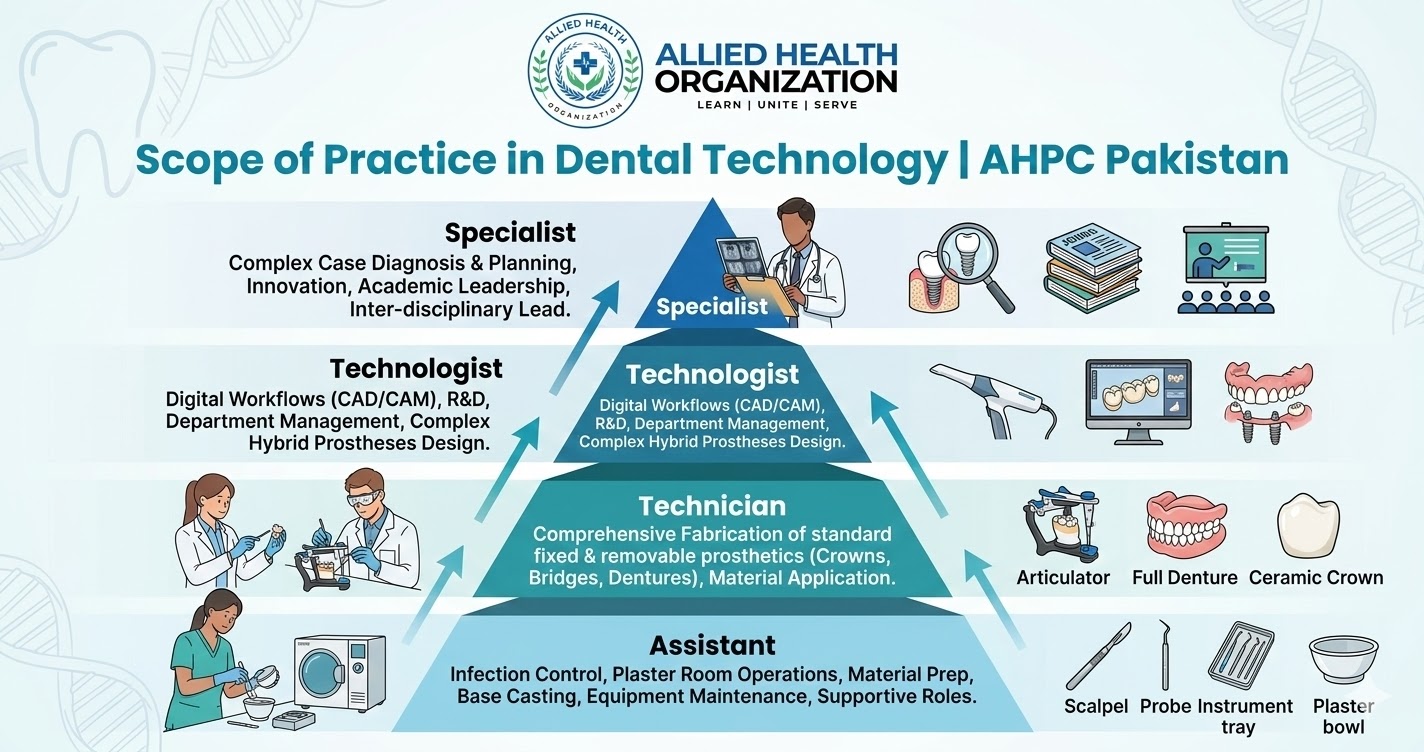
The Dental Technology Scope of Practice in Pakistan defines the roles, responsibilities, and limitations of dental professionals, including Dental Assistants, Technicians, Technologists, and Specialists. Regulated by the Allied Health Professionals Council (AHPC), this framework ensures patient safety, professional accountability, and standardized clinical practice across dental healthcare services. Understanding this scope is essential for students, graduates, and healthcare institutions to provide safe and effective oral care.
In Pakistan, qualified dental technology professionals existed long before formal regulations, but many faced harassment, fines, and legal actions from healthcare commissions for practicing without official recognition. This situation resulted in loss of livelihoods for thousands, despite professionals holding valid degrees recognized by the Higher Education Commission (HEC).
The Allied Health Professionals Council (AHPC) Act, championed by visionary leaders like Syed Asad ul Abbas Naqvi and his dedicated team, provided a regulatory framework to protect allied health professionals. After four years of persistent advocacy, the Scope of Practice for dental technology was finally approved. This historic milestone ensures that qualified professionals can legally practice without harassment, while unqualified individuals are discouraged from misrepresentation.
Furthermore, our association, the Allied Health Organization, continues to fight for professional rights in Pakistan’s courts, advocating for the proper implementation of the Scope of Practice. We hope that after official recognition, health departments and healthcare commissions will respect and protect this professional community, ensuring safety, dignity, and fair treatment.
Understanding this scope is now critical for students, graduates, healthcare institutions, and regulatory authorities.
Categories of Dental Technology Professionals
Under the AHPC framework, dental technology professionals are classified based on education, training, and competency. These categories include:
-
Dental Assistant (Certificate Level)
-
Dental Technician (Diploma Level)
-
Dental Technologist (BS Degree Level)
-
Dental Technology Specialist (MS / MPhil Level)
Each category has a defined professional scope, ensuring safe, competent, and regulated dental healthcare delivery, and preventing harassment of properly trained professionals.
Dental Assistant Scope of Practice (Certificate Level)
Overview
A Dental Assistant is an entry-level allied health professional who supports dentists and dental technologists in clinical procedures. They play a vital role in clinic efficiency, infection control, and patient support.
Dental assistants usually hold a one-year certificate in Dental Technology or Dental Assisting from a recognized institution.
Responsibilities
According to AHPC guidelines, dental assistants may:
-
Assist dentists and dental technologists during procedures
-
Prepare patients and record medical histories
-
Ensure sterilization and infection control protocols
-
Pass dental instruments during procedures
-
Prepare dental materials for treatment
-
Take dental impressions for diagnostics
-
Take radiographs under supervision
-
Educate patients on oral hygiene
-
Manage clinic appointments and patient records
-
Maintain dental equipment and inventory
Limitations
Dental assistants cannot perform specialized or surgical procedures independently. All tasks must comply with regulatory guidelines and professional supervision.
Dental Technician Scope of Practice (Diploma Level)
Overview
A Dental Technician is a trained professional with a two-year diploma in Dental Technology. They possess advanced technical skills and contribute significantly to restorative dentistry and prosthetics.
Responsibilities
Dental technicians are authorized to:
-
Provide oral health education to patients and communities
-
Extract primary (milk) teeth where permitted
-
Provide restorative treatment for primary teeth
-
Design and fabricate removable dental appliances
-
Provide complete and partial dentures
-
Take dental impressions and radiographs
-
Adjust implant-supported dentures
-
Remove sutures under supervision
-
Perform tooth whitening procedures under supervision
-
Assist dentists in treatment planning
-
Handle dental laboratory materials and equipment
Limitations
Dental technicians cannot perform complex surgeries or treat medically compromised patients without authorization. All services must follow AHPC regulations.
Dental Technologist Scope of Practice (BS Degree Level)
Overview
A Dental Technologist holds a Bachelor of Science (BS) in Dental Technology and may supervise assistants and technicians. They provide primary oral healthcare, preventive care, and clinical services.
Responsibilities
Dental technologists may perform:
-
Conducting oral examinations and patient assessments
-
Recording medical and dental histories
-
Scaling and polishing procedures
-
Preventive oral healthcare
-
Routine tooth extractions
-
Placing pre-formed crowns on primary teeth
-
Prescribing radiographs and taking impressions
-
Pulp therapy and administering local anesthesia
-
Delivering emergency dental care
-
Educating patients on preventive practices
-
Fabricating dental prostheses and orthodontic appliances
-
Routine periodontal treatments
-
Teaching dental technology students
Limitations
Dental technologists cannot perform major oral surgeries, complex procedures, advanced periodontal grafting, or treat high-risk patients independently. These restrictions maintain patient safety and professional standards.
Dental Technology Specialist Scope of Practice (MS / MPhil Level)
Overview
A Dental Technology Specialist represents the highest professional qualification, typically holding MS or MPhil degrees. They contribute to clinical care, research, policy development, and community health programs.
Responsibilities
Dental technology specialists can:
-
Perform all duties of dental technologists
-
Conduct comprehensive oral health assessments
-
Develop detailed treatment plans
-
Interpret radiographs and diagnostic findings
-
Prescribe preventive agents such as fluoride treatments
-
Perform minor oral surgical procedures
-
Fabricate advanced dental prostheses and orthodontic appliances
-
Conduct periodontal treatment and maintenance care
-
Lead community oral health promotion programs
-
Conduct research on oral diseases and dental technologies
-
Develop public health strategies for oral disease prevention
-
Train allied dental professionals in healthcare institutions
-
Collaborate with multidisciplinary healthcare teams
Limitations
Even at this advanced level, specialists cannot independently perform major oral surgeries, highly complex procedures, gingival grafting, or treat high-risk patients without specialist collaboration.
Historical and Social Context
Before AHPC regulations, qualified dental professionals faced daily harassment from healthcare commissions. Many were unfairly labeled as “quacks” despite holding HEC-recognized degrees, and thousands of livelihoods were disrupted.
After years of advocacy, Syed Asad ul Abbas Naqvi and his team successfully secured the Scope of Practice approval, legally protecting qualified professionals and curbing unqualified practice.
The Allied Health Organization continues to fight legal battles in Pakistan’s courts to safeguard professional rights, ensuring the proper implementation of the Scope of Practice. The hope is that after formal recognition, health departments and healthcare commissions will respect and support this professional community, maintaining dignity, safety, and lawful practice.
Importance of Scope of Practice
Defining a clear scope of practice ensures:
-
Patient safety
-
Professionals work within their competencies
-
Ethical and accountable healthcare practices
-
Prevention of unauthorized or unsafe procedures
-
Strengthened teamwork among dental healthcare professionals
-
Protection of qualified professionals’ legal rights and livelihoods
Structured hierarchies also help institutions manage human resources efficiently while maintaining clinical excellence.
Conclusion
Dental technology professionals play an essential role in Pakistan’s oral healthcare system. From dental assistants who support clinical procedures to dental technology specialists leading research and public health programs, each level contributes significantly to improved patient care.
The AHPC Scope of Practice ensures that qualified professionals can practice legally, safely, and confidently, while protecting the community from unqualified practice. This framework also acknowledges the visionary leadership of Syed Asad ul Abbas Naqvi and his team, whose efforts led to this historic milestone after four years of persistent advocacy.
With proper regulation and ongoing legal support from the Allied Health Organization, dental technology professionals now have clarity, recognition, and protection, ensuring both patient safety and professional integrity in Pakistan.

You may also like

MLT Practice Rights in Pakistan | AHPC 2026
