How Much Water Do You Really Need? Hydration Tips for Healthy Living
Staying well‑hydrated seems simple, yet many people still fall short. Adequate water intake is essential for virtually every bodily function: it regulates temperature, cushions joints, transports nutrients, removes waste and keeps organs working properly[1]. Hydration also plays an underappreciated role in energy levels, cognition and mood[2]. In Pakistan’s warm climate, drinking enough water is especially important to prevent dehydration and maintain overall health.
Why Hydration Matters
Water makes up about 60 percent of the human body and is vital for the circulation of blood and lymph, digestion of food and regulation of temperature. Even mild dehydration can make you feel tired, impair your ability to think clearly and contribute to headaches or dizziness[3]. Chronic low fluid intake can have longer‑term consequences, including an increased risk of kidney stones, urinary tract infections and constipation. The Harvard T.H. Chan School of Public Health notes that being well‑hydrated can improve sleep quality and help regulate mood[4].
How Much Water Do You Need?
There is no one‑size‑fits‑all recommendation for daily water intake, because the amount you need depends on factors like age, weight, activity level, environment and overall health. Researchers estimate that healthy adults generally meet their hydration needs when they consume about 11 cups (2.7 liters) of total fluid per day for women and 15 cups (3.7 liters) for men[5]. This includes water from all sources—drinking water, other beverages and moisture from food. In fact, foods such as cucumbers, melons, strawberries and cabbage are mostly water by weight, contributing about 20 percent of total intake[6].
A common rule of thumb is the “8×8” guideline—eight glasses of eight ounces each per day. While easy to remember, it may not suit everyone. People who are physically active or work outdoors in hot or humid conditions need extra fluid to replace what they lose through sweat[7]. Pregnant and breastfeeding women also have higher hydration requirements[8]. Conversely, individuals with certain medical conditions, such as heart failure or kidney disease, may need to limit their fluid intake. A healthcare professional can provide personalized advice if you’re unsure how much water is right for you.
Daily Fluid Needs by Life Stage
| Life stage | Approximate daily fluid needs* |
| Adult women | About 11 cups (2.7 liters) of total fluids |
| Adult men | About 15 cups (3.7 liters) of total fluids |
| Pregnant people | Additional 1–2 cups |
| Breastfeeding people | Additional 2–3 cups |
| Children (ages 4–8) | 5–6 cups |
| Youth (ages 9–13) | 7–8 cups |
| Teens (ages 14–18) | 8–11 cups |
*Approximate values; individual needs vary depending on activity level, environment, body size and health status.
Sources of Daily Water Intake
Water
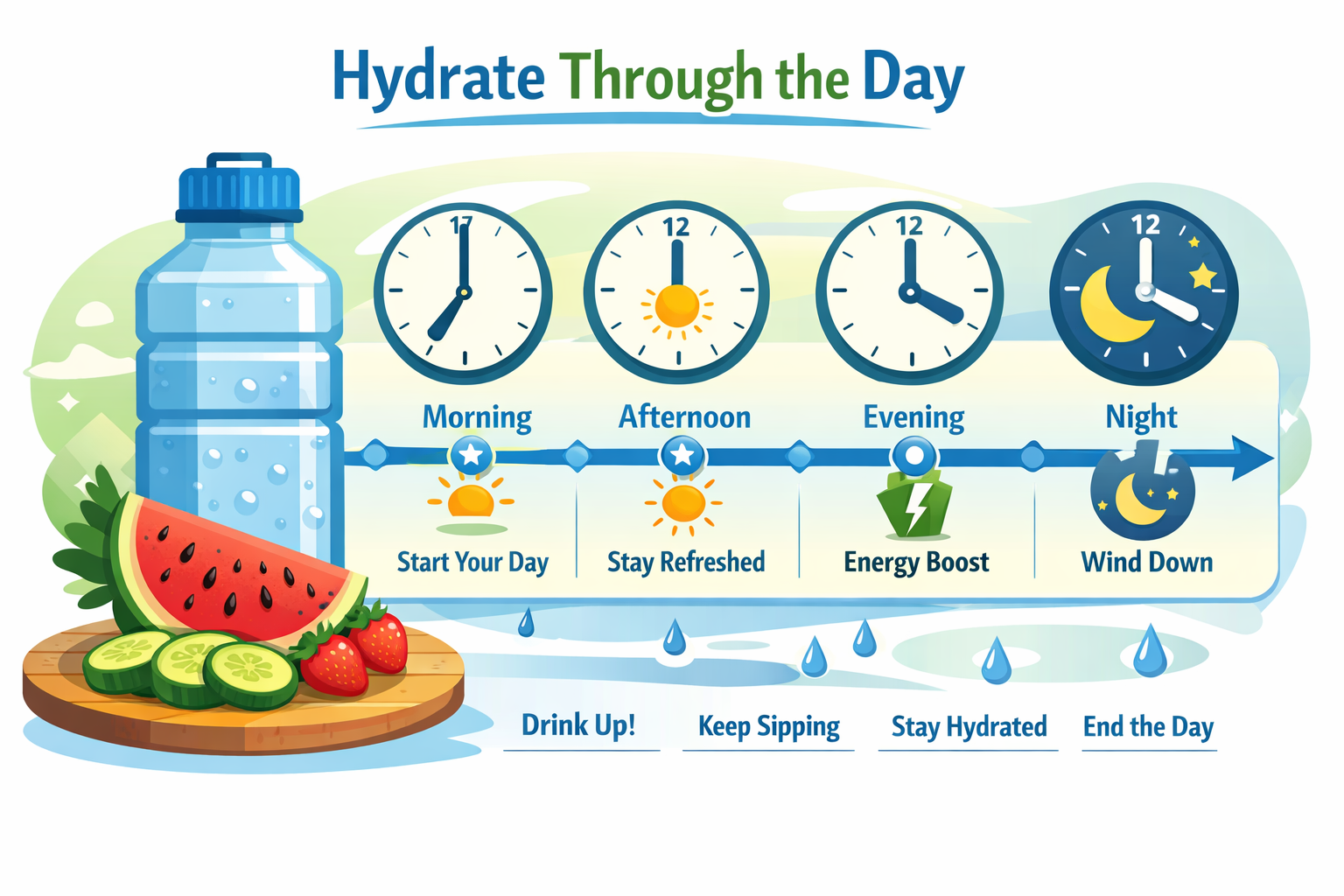
Plain water is the best choice for meeting hydration needs. It contains zero calories, no added sugar and is readily available. Drinking water with meals and between meals helps maintain fluid balance throughout the day[9]. For those who find water bland, adding slices of citrus, cucumber or berries can make it more appealing without added sugar.
Other Beverages
Other drinks count toward your daily fluid tally. Tea, coffee and milk all contribute to hydration[10]. Herbal tea and unsweetened iced tea are good options for variety. However, sugar‑sweetened beverages like sodas, energy drinks and many fruit juices are not ideal. They provide excessive calories and can contribute to weight gain or other health issues[11]. Sports drinks may be useful for endurance athletes or anyone exercising intensely for more than an hour, but they are unnecessary for most people.
Foods
Many fruits and vegetables are naturally high in water. Watermelon, strawberries and cucumbers provide hydration along with vitamins and fiber. Soups and broths also contribute to fluid intake, as do yogurt and smoothies. Including water‑dense foods is an easy way to boost hydration, especially for those who struggle to drink enough water alone.
Recognizing Dehydration
Thirst is not always a reliable indicator of dehydration—by the time you feel thirsty, you may already be lacking fluids. Warning signs include dark yellow urine, infrequent urination, dry mouth, fatigue, headache and dizziness[12]. Severe dehydration can cause confusion and rapid heart rate. Older adults and young children are particularly vulnerable, so caregivers should monitor fluid intake and watch for subtle signs.
The Urine Color Test
An easy way to gauge hydration status is to check the color of your urine. Pale or light yellow urine generally indicates adequate hydration, while dark yellow or amber urine may signal the need for more fluids. Keep in mind that certain vitamins and medications can alter urine color, so this method isn’t foolproof.
Daily Hydration Tips to Meet Your Water Intake
Make Water Accessible for Daily Water Intake
Carry a reusable water bottle wherever you go—having water within arm’s reach encourages regular sipping. Keeping bottles at your desk, in your car or in your bag reduces reliance on sugary drinks when thirst strikes. Choose a bottle size and design that you enjoy using.
Set Reminders
If you often forget to drink water, set reminders on your phone or computer. Some people like using hydration tracker apps or a marked bottle that shows how much to drink by certain times of day. Habit‑stacking—linking water breaks to existing routines like meals or work breaks—can also help make hydration effortless.
Hydrate Before, During and After Exercise to Meet Daily Intake
Physical activity increases fluid loss through sweat. Drink water before you start exercising, sip during your workout and rehydrate afterward. If you’re exercising in hot or humid conditions, consider using an electrolyte beverage, but be mindful of added sugars. For moderate workouts under an hour, water alone is usually sufficient[13].
Monitor Alcohol and Caffeine
Both alcohol and caffeinated beverages like coffee and tea have mild diuretic effects, meaning they can increase urination. Moderate consumption is generally fine, but make sure to balance these drinks with plain water. Limit alcohol, as excessive drinking can cause dehydration and has other health risks[14].
Keep an Eye on Weather and Environment
Hot, humid or high‑altitude environments increase water needs because you lose more fluid through sweat and breathing[15]. During heatwaves, take extra care to drink water regularly and avoid prolonged exposure to direct sunlight. In cold weather, you may not feel as thirsty, but your body still requires adequate fluid, especially if you’re wearing heavy clothing or engaging in winter sports.
Can You Drink Too Much Water?
While uncommon, it is possible to consume too much water. When you drink excessive amounts rapidly, your kidneys cannot excrete the extra water, leading to dangerously low blood sodium levels—a condition known as hyponatremia[16]. Endurance athletes sometimes experience this if they overhydrate during long events. Symptoms include nausea, vomiting, headache, confusion and, in severe cases, seizures. To prevent hyponatremia, drink water steadily throughout the day rather than guzzling large quantities in a short time, and consider beverages with electrolytes during prolonged, intense exercise.
Special Considerations
Children and Adolescents
Children need proportionately more fluids relative to body size than adults. Encourage them to drink water throughout the day, especially during play and sports. Avoid offering sugary drinks as a default—limit fruit juices to small portions and skip sodas entirely. Milk and water should be the primary beverages.
Older Adults
As people age, the sensation of thirst diminishes, and kidney function may decline. Older adults may also take medications that affect fluid balance. Encourage regular sips of water even when they do not feel thirsty. Hydrating foods like soups, fruits and vegetables can help increase fluid intake without forcing large volumes of water.
People with Chronic Health Conditions
Individuals with heart failure, kidney disease or certain endocrine disorders may need to limit or monitor fluid intake carefully. Conversely, some conditions like urinary tract infections or kidney stones may require increased fluid consumption[17]. Always follow the guidance of your healthcare provider.
Frequently Asked Questions
What counts as a cup of water?
A cup refers to 240 milliliters (8 fluid ounces). This standard measurement allows you to track total fluid intake from beverages and food.
Do coffee and tea count toward hydration?
Yes. While caffeinated drinks have a mild diuretic effect, they still contribute to overall fluid intake. You do not need to compensate by drinking extra water for every cup of coffee or tea, but it’s wise to balance them with plain water.
Is it okay to drink sparkling water?
Carbonated water (sparkling water) hydrates as effectively as still water. Just be cautious of flavored varieties that may contain added sugar or sodium.
How can I tell if I’m drinking enough water?
Monitor the color of your urine—it should be pale yellow. You should urinate every two to four hours and not feel lightheaded or unusually tired. Consistent headaches, dry lips and infrequent urination may indicate insufficient fluid intake.
Do I need sports drinks or electrolyte solutions?
Most people can meet their fluid and electrolyte needs with water and a balanced diet. Sports drinks are designed for athletes engaged in prolonged, high‑intensity activity (over 60 minutes) or those exercising in extreme heat. They can replenish sodium and potassium lost through heavy sweating, but they are unnecessary for routine workouts. Choose low‑sugar varieties if using them.
Conclusion
Hydration is fundamental to good health. Water supports nearly every bodily process, from regulating temperature and blood pressure to aiding digestion and cognitive function. While individual fluid needs vary, most adults can meet their hydration goals by drinking water consistently throughout the day and eating water‑rich foods. Pay attention to signs of thirst and dehydration, adjust your fluid intake when active or in extreme temperatures, and consult a healthcare professional if you have medical conditions that affect fluid balance. By making hydration a daily habit, you can boost your energy, support organ function and promote overall well‑being.
Medical Disclaimer
This content is for informational purposes only and is not medical advice. Always consult a qualified healthcare professional for diagnosis, treatment, or personal health decisions.
d Reading for Allied Health Professionals
There are several types of reading materials that are particularly valuable for Allied Health Professionals. First, clinical textbooks specific to your discipline provide foundational and advanced knowledge. Second, research journals such as medical laboratory science publications keep you updated on new techniques and findings. Third, healthcare management and leadership books help professionals grow beyond clinical roles. Additionally, reading about the legal framework of Allied Health in Pakistan, including AHPC registration requirements, is highly recommended.
Building a Reading Habit
Developing a consistent reading habit requires planning and commitment. Therefore, Allied Health Professionals should set aside at least 30 minutes daily for professional reading. Moreover, subscribing to healthcare newsletters, joining online communities, and following reputable medical websites can make reading more convenient and engaging. In addition, AHO Pakistan regularly publishes informative articles and guides that Allied Health Professionals can benefit from. Consequently, staying connected with AHO ensures you never miss important updates in the field.
Reading and Career Advancement
Professionals who invest time in reading typically experience faster career growth and greater professional satisfaction. Furthermore, reading about career opportunities, international standards, and global healthcare trends opens new doors for Allied Health Professionals seeking to work abroad or move into leadership positions. Therefore, make reading a non-negotiable part of your daily routine as an Allied Health Professional in Pakistan.
In conclusion, reading is a fundamental tool for success in the Allied Health field. Moreover, the knowledge gained through regular reading translates directly into better patient care, stronger professional standing, and enhanced career opportunities. Visit the AHO Blog for expert articles and resources tailored for Allied Health Professionals in Pakistan.

You may also like

MLT Practice Rights in Pakistan | AHPC 2026
